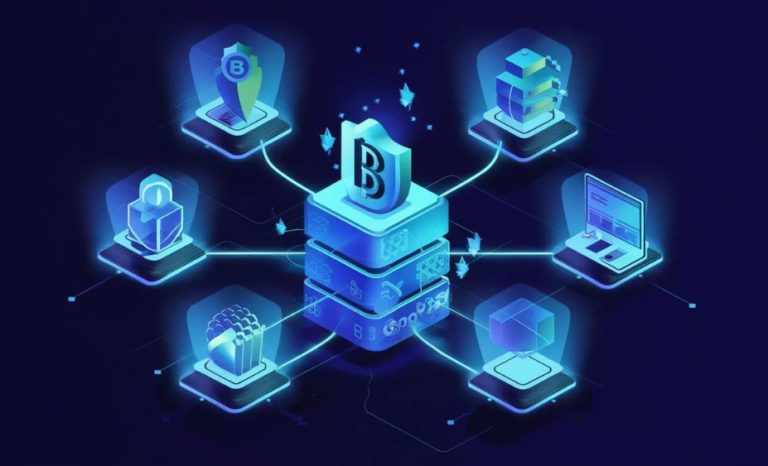

Oracles bridge smart contracts with external data by sourcing inputs from multiple feeds and attaching time-stamped attestations. They perform cross-checks, deterministic validation, and provenance tracking to minimize tampering risk. Choices between centralized and decentralized models impact latency, redundancy, and trust assumptions. Data delivery must be auditable and tamper-resistant, with synchronized clocks for autonomous decisions. The trade-offs in security, performance, and reliability leave a critical gap to be addressed as ecosystems scale.
What Oracle Feeds Do for Smart Contracts
Oracle feeds provide external data to smart contracts, enabling on-chain logic to react to real-world events with verifiable inputs. The feeds supply structured, time-stamped measurements and signatures, establishing data provenance and trust boundaries. Latency optimization reduces confirmation times, while redundancy and fault detection preserve resilience. Analysts quantify reliability, throughput, and error margins to ensure predictable, auditable automation with freedom-driven governance.
See also: nomadexa
How to Choose: Centralized vs. Decentralized Oracle Models
Centralized and decentralized oracle models present distinct trade-offs in reliability, governance, and risk exposure. Decision criteria weigh data provenance, fault tolerance, and update cadence against governance clarity and cost.
Centralized concerns include single-point failure and vendor limitations, while decentralized tradeoffs emphasize diverse data sources and consensus mechanisms. The choice aligns with risk tolerance, disclosure preferences, and desired autonomy in execution environments.
Key Security, Trust, and Latency Factors for Oracles
The discussion quantifies data provenance, attestation methods, and cross-checking, highlighting latency optimization through parallel fetches, deterministic validation, and streamlined aggregation.
It emphasizes transparent threat modeling, measurable reliability, and decoupled fault domains for resilient, freedom-friendly deployments.
Building Resilient Data Flows for DeFi and Beyond
The discussion centers on reliable data feeds, robust validation, and streaming guarantees, enabling predictable outcomes.
Cross chain integration is addressed through standardized adapters, verifiable proofs, and synchronized clocks, supporting autonomous decisioning and auditable, tamper-resistant data delivery.
Conclusion
Oracles serve as the essential conduit between off-chain data and on-chain logic, transforming external feeds into verifiable, time-stamped inputs for smart contracts. Whether centralized or decentralized, robust data provenance, multi-source cross-checks, and deterministic validation underpin trust and latency goals. Effective designs implement failover, threat modeling, and auditable attestations to sustain accuracy under market stress. In essence, a well-architected oracle is the compass and clock for automated protocols, guiding DeFi safely through volatile seas. Imagine a lighthouse calibrating every wave to a precise, reproducible coordinate.